
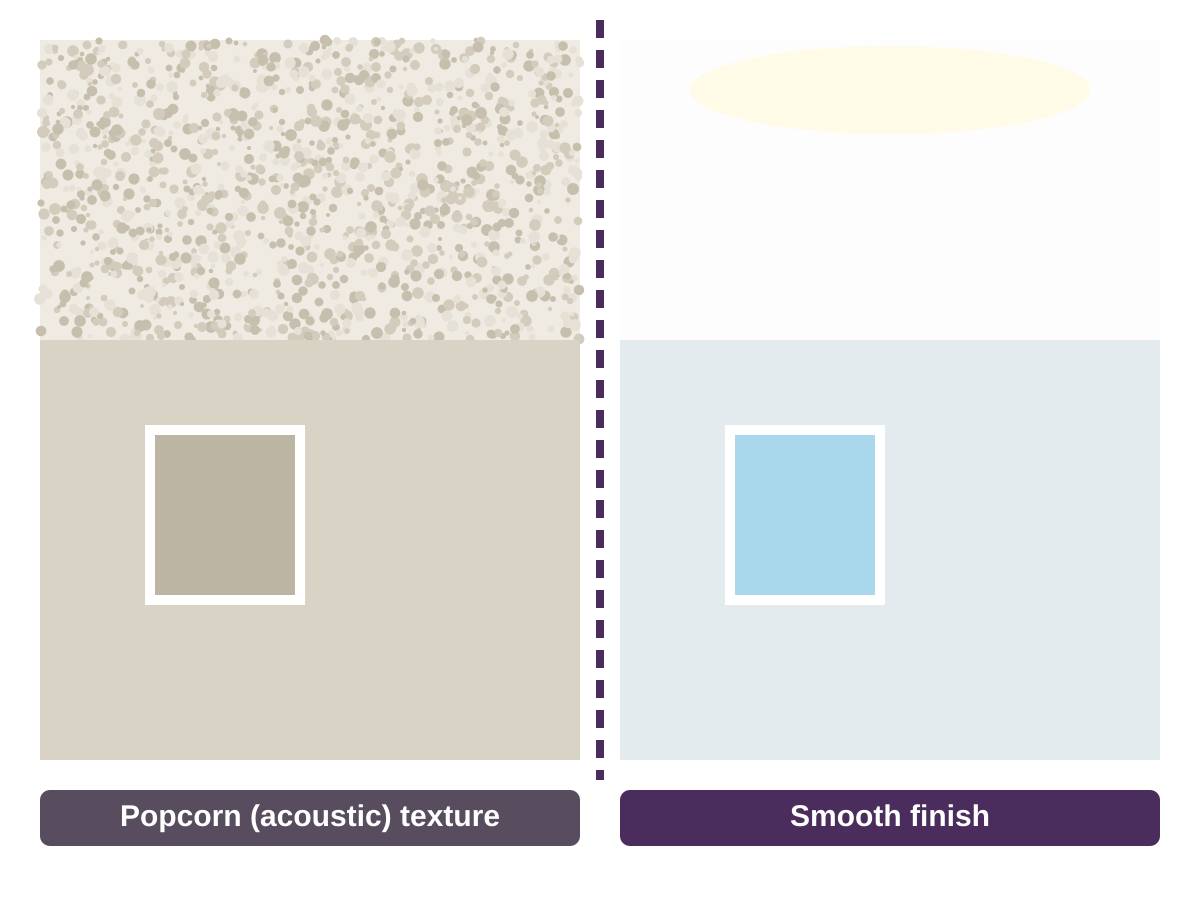
Why a scraped ceiling isn't ready for paint
In a lot of homes from the 1960s through the 80s, popcorn was sprayed over drywall that had only been roughly finished, because the texture would hide it. Once the texture is gone you can see:
- Tape seams with a single thin coat of compound
- Fastener heads that were never covered
- Scrape marks and small gouges from removal
- Patchy leftover texture in corners and along walls
Painting straight over that looks worse than the popcorn did. A skim coat solves it.
How a skim coat is done
- Repair first: loose tape is re-bedded, fasteners reset, gouges filled. See ceiling repair.
- Prime if needed: torn drywall paper is sealed so compound doesn't bubble.
- Apply thin coats of compound over the entire ceiling, usually two or three.
- Sand between coats, checking with a work light held at a low angle to catch ridges.
- Prime and paint: see ceiling painting.
Is smooth right for your rooms?
Smooth is the cleanest, most current look, and it's the easiest ceiling to repaint or patch later. It's also the most demanding to get right. Consider it for main living spaces, kitchens and anywhere you'll notice the ceiling. For a garage, basement or a room where budget matters more, a light texture is a sensible alternative.
If the popcorn was painted, skim coating over it without full removal is sometimes an option. See painted popcorn ceiling removal.
Questions for a finisher
- How many coats do you expect, and is a full skim (Level 5) included?
- How do you control sanding dust?
- Do you check the ceiling with a low-angle light before priming?
- Is priming and painting part of the price?
What affects the price
- Condition of the drywall after removal
- Number of coats needed to get it flat
- Ceiling height and square footage
- Whether primer and paint are included
Call (678) 716‑1062 to get connected with a local pro for a free estimate, or read the cost guide.